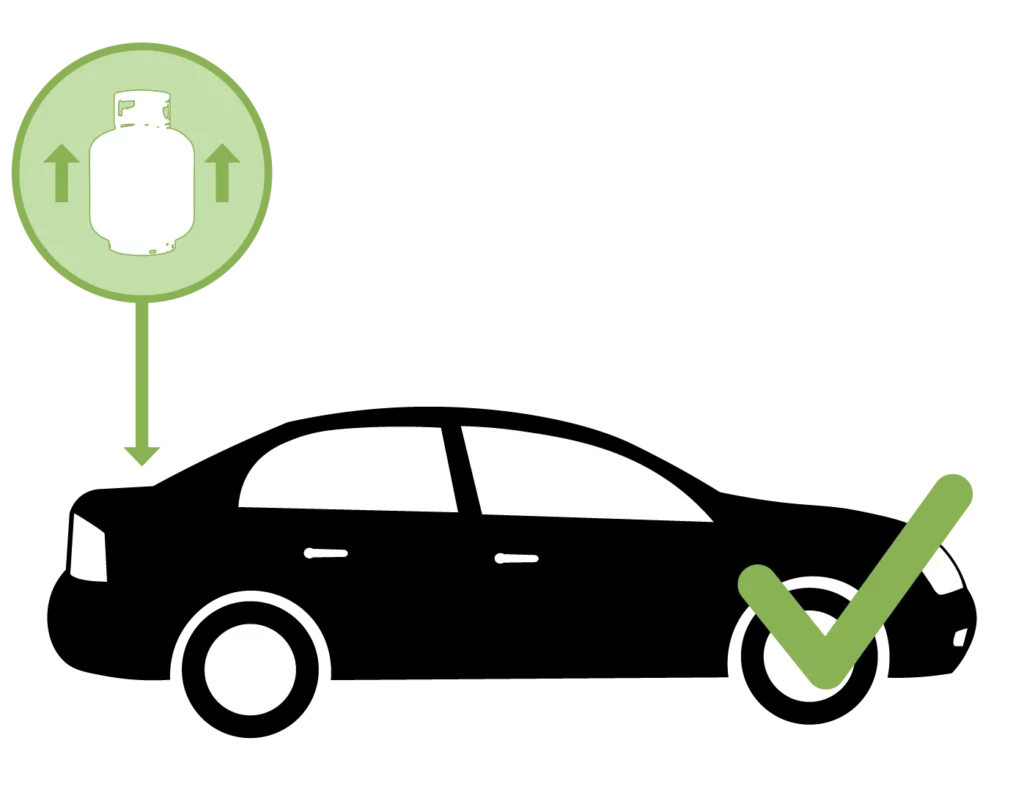
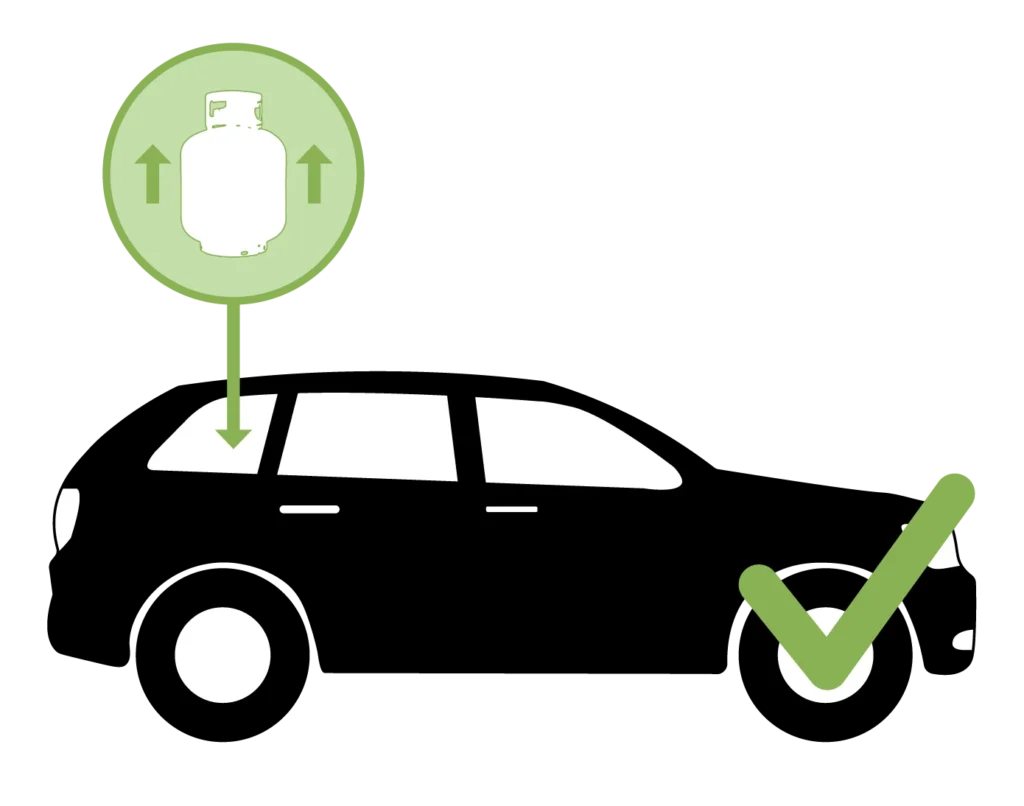
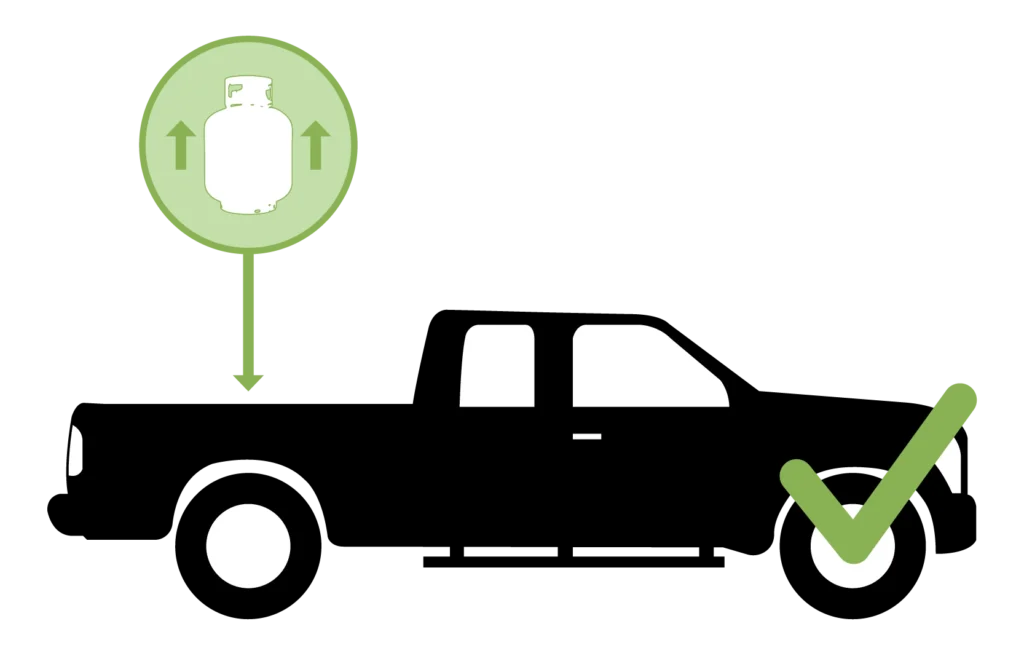
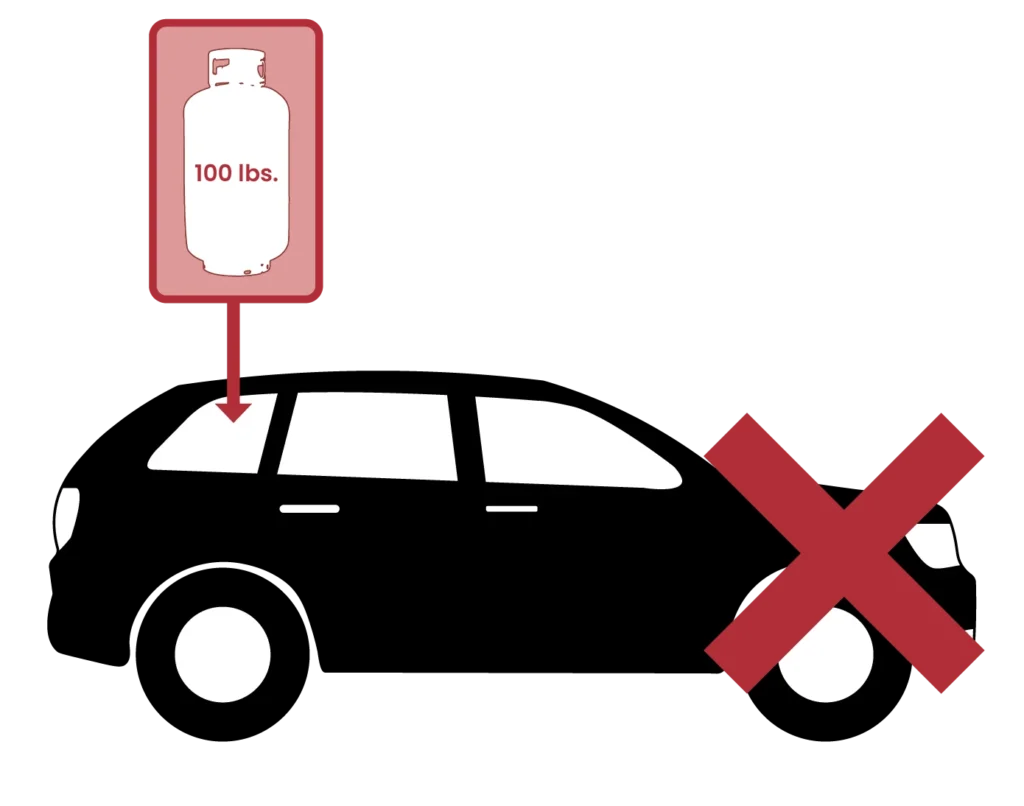
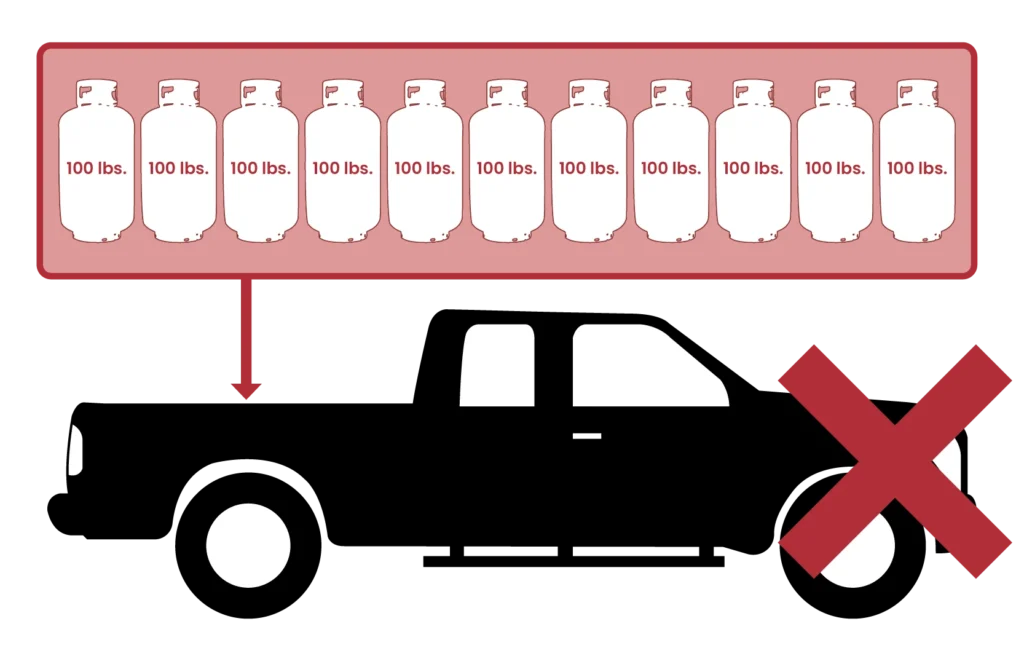
Make sure they will not shift or roll. Avoid transporting in passenger area. If possible, secure in:
Trunk of sedan
Cargo are of SUV, van
or hatchback
Cargo bed of pickup truck
WAYS TO SECURE A CYLINDER
Tie-downs/straps
Propane Cylinder Stabilizer
Cardboard Box, Milk Crate
DO NOT LEAVE CYLINDERS IN YOUR VEHICLE
Drive directly to your destination and immediately remove the cylinders from your vehicle. Do not leave cylinders inside the vehicle or trunk. The pressure relief valve (if the parked vehicle gets too hot) or a leak may release propane, filling the enclosed space with flammable gas.
HOW MUCH PROPANE CAN I TRANSPORT?
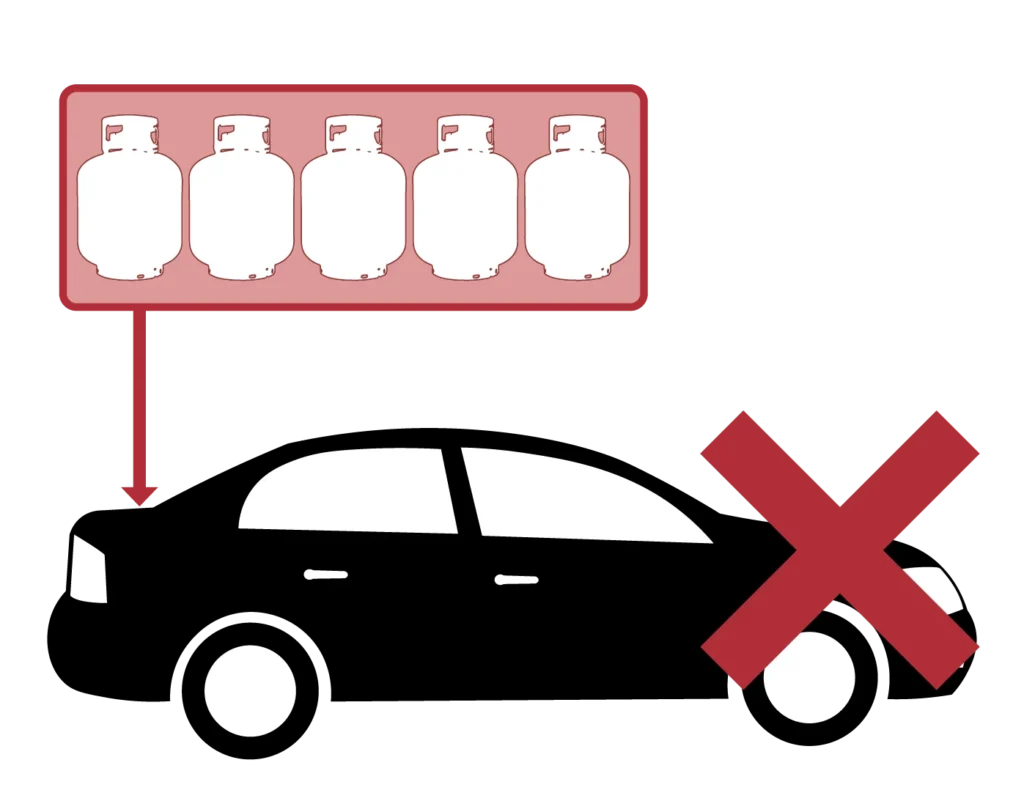
U.S. legal limits for closed-bodied vehicles:
No more than four (4) 20-pound cylinders.
No cylinders larger than 45-pound capacity.
No more than 90 pounds total propane weight.
U.S. legal limits for an open cargo bed:
No more than 1,001 pounds total propane and container weight.
Storing Grill Tanks
NEVER USE OR STORE IN AN ENCLOSED AREA such as a basement, garage, shed, or tent. Even an “empty” cylinder may contain enough propane to be hazardous.
KEEP SPARE CYLINDERS AWAYFROM PROPANE APPLIANCES Do not put a spare propane cylinder (i.e., a cylinder that is not connected to the appliance) under or near a grill or other propane appliance.
NEVER USE OR STORE IN AN ENCLOSED AREA such as a basement, garage, shed, or tent. Even an “empty” cylinder may contain enough propane to be hazardous.
The cylinder is designed to be kept outside in any weather, even full summer sun.
Additional heat (for example, from a heating appliance or fire) can cause pressure to buildup inside the cylinder. If this happens, the pressure relief device might release propane.
Released or leaking propane can be ignited or collect in an enclosed area.