Before you fire up the grill, take a few minutes to check your propane tank, inspect the hose, test for leaks and place your grill a safe distance from your home. Mi Safe Grilling helps Michigan families cook outdoors with confidence.
Before Grilling:
I. Inspect Your Propane Tank and Hoses:
There’s no dents, bulges or cracks.
There’s no rust or pitted metal.
The tank’s foot ring, “collar” at the top or valve cover is not bent.
The Overfill Prevention Device (OPD) valve is intact.
The hose is not dried out or cracked.
The connection points between hose, regulator and cylinder are not loose.
II. Do a Leak Test Outside – No Smoking
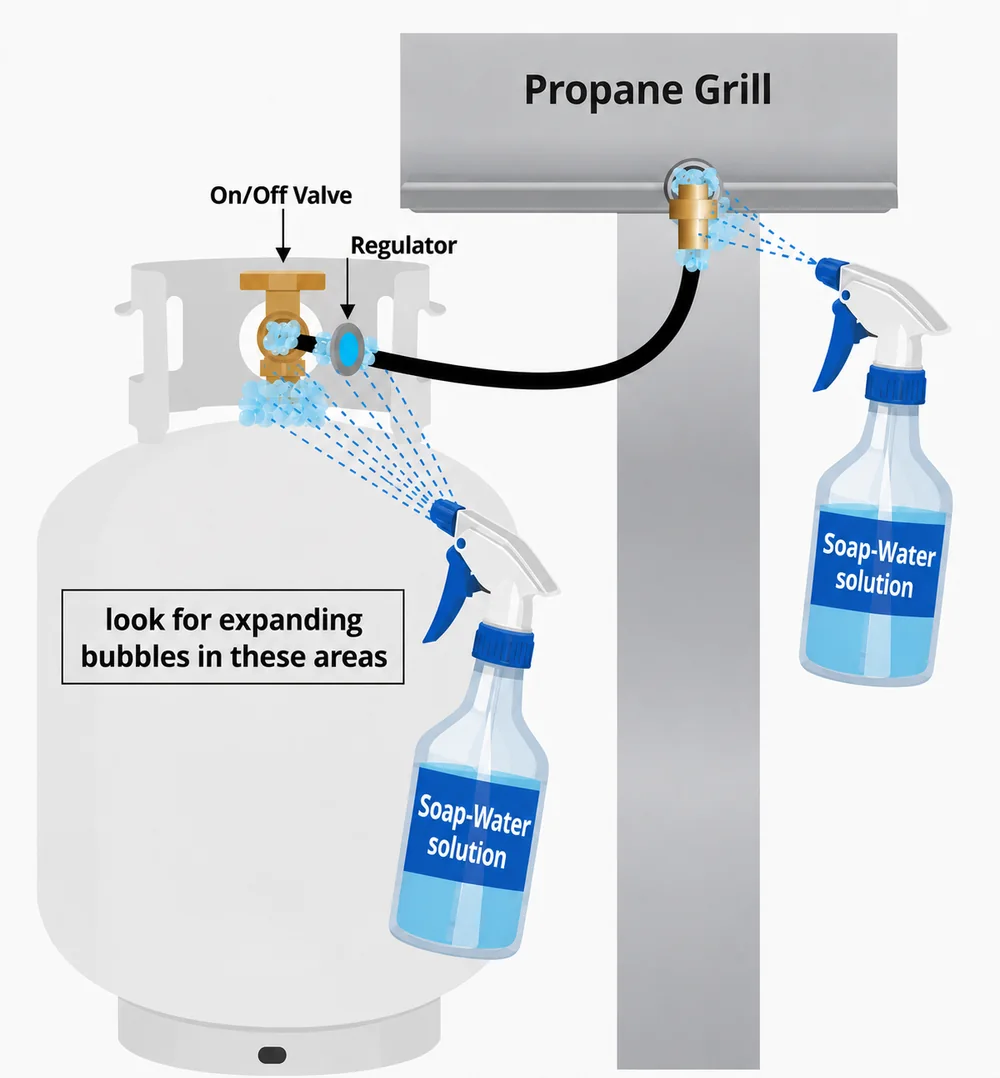
Add soapy water to a spray bottle
Grill burners – OFF position
Propane tank – OFF position (Turn Valve to Right)
Connect the hose to both propane tank and grill
Turn the propane tank ON – quarter turn only
Spray soapy solution on:
On-Off Valve
Regulator
And, hose grill connection area
If soap bubbles don’t expand = no leak
If soap bubbles grow bigger and pop, and if you smell ‘rotten-egg” smell, TURN OFF Propane Tank and Grill Immediately = There’s a Leak
DO NOT USE leaking propane cylinder. Contact your local propane supplier.
20 lb. propane grill tanks are generally good for 12 years from the date of manufacture. After 12 years, the tank must be requalified or replaced before it can be refilled. Depending on the approved requalification method, the next requalification period may be 5, 10, or 12 years.
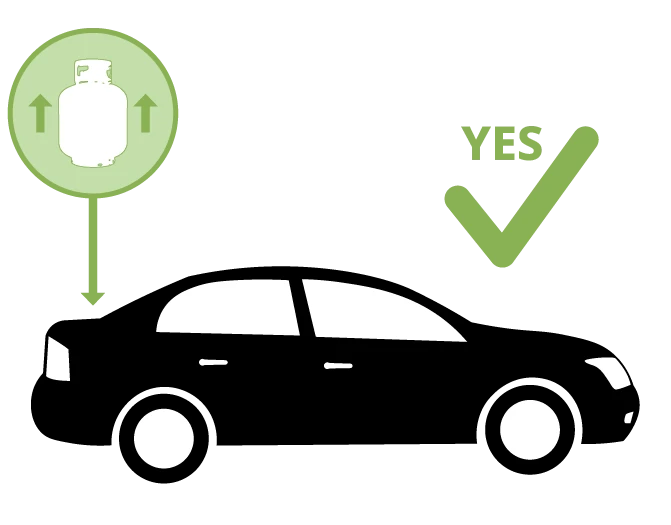
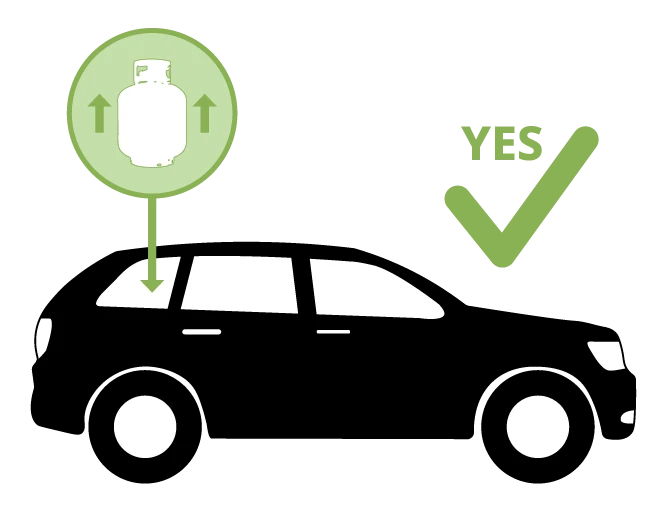
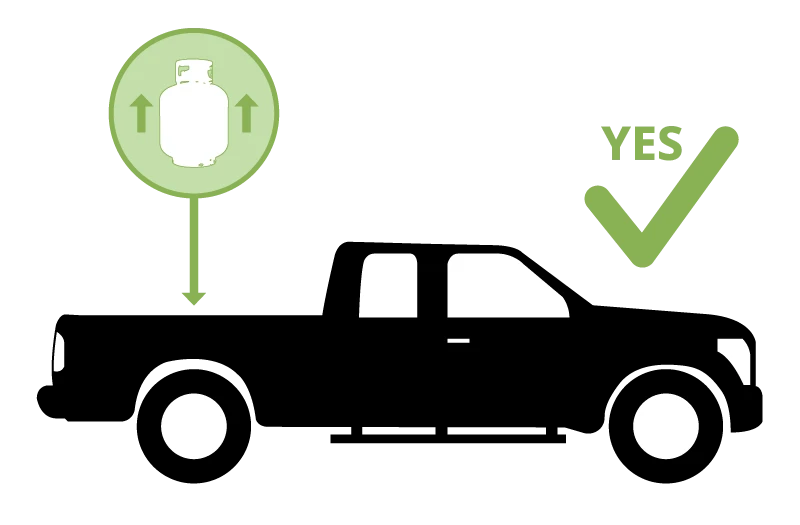
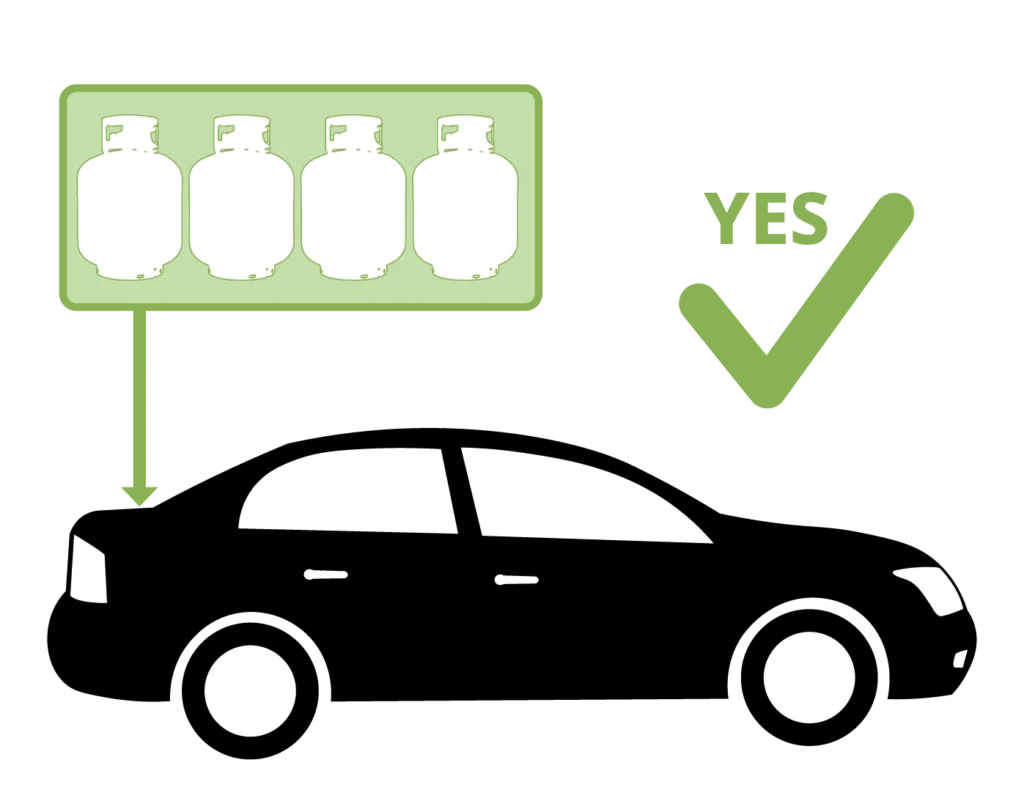
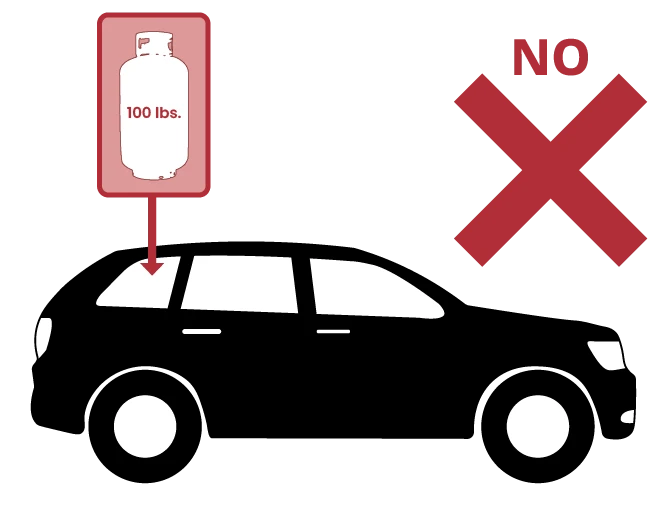
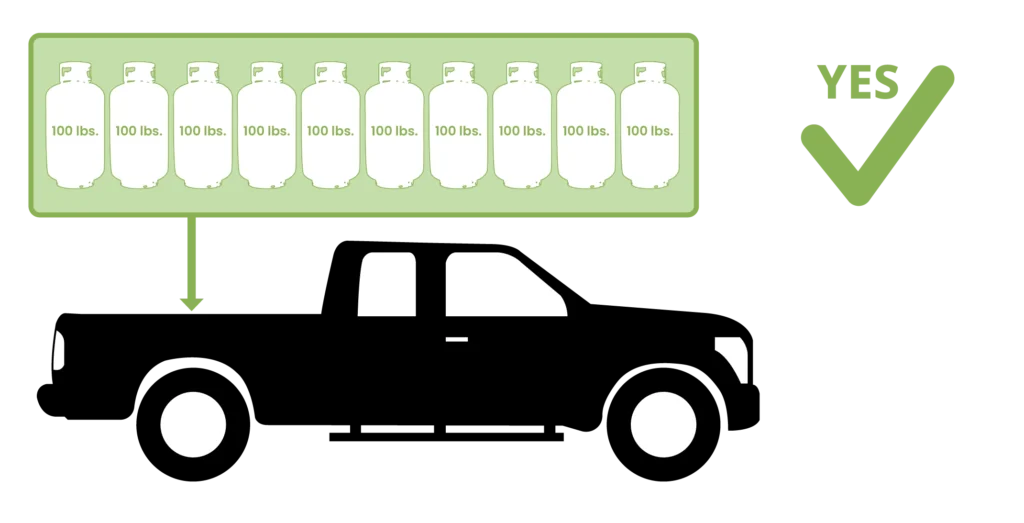
Make sure they will not shift or roll. Avoid transporting in passenger area. If possible, secure in:
Trunk of sedan
Cargo area of SUV, van
or hatchback
Cargo bed of pickup truck
WAYS TO SECURE A CYLINDER
Tie-downs/straps
Propane Cylinder Stabilizer
Cardboard Box, Milk Crate
DO NOT LEAVE CYLINDERS IN YOUR VEHICLE
Drive directly to your destination and immediately remove the cylinders from your vehicle. Do not leave cylinders inside the vehicle or trunk. The pressure relief valve (if the parked vehicle gets too hot) or a leak may release propane, filling the enclosed space with flammable gas.
Legal Limits for Transporting Propane Cylinders
No more than four (4) 20-pound cylinders.
No cylinders larger than 45-pound capacity.
No more than 90 pounds total propane weight.
No more than 1,001 pounds total propane and container weight.
STORING PROPANE CYLINDERS
The cylinder is designed to be kept outside in any weather, even full summer sun.
NEVER USE OR STORE IN AN ENCLOSED AREA such as a basement, garage, shed, or tent. Even an “empty” cylinder may contain enough propane to be hazardous.
KEEP SPARE CYLINDERS AWAYFROM PROPANE APPLIANCES Do not put a spare propane cylinder (i.e., a cylinder that is not connected to the appliance) under or near a grill or other propane appliance.
Additional heat (for example, from a heating appliance or fire) can cause pressure to buildup inside the cylinder. If this happens, the pressure relief device might release propane.
Released or leaking propane can be ignited or collect in an enclosed area.
Follow The Manufacturer's Instructions
Whether it's assembly, use, maintenance, cleaning, or storage, make your grill manufacturer's instructions you go-to resource for safe grilling.
Keep Grill on level ground, 10 feet from your home/garage
Keep your grill outdoors and at least 10 feet from the house on a level surface that is clear of outdoor furniture, overhead trees or other potential fire hazards.
Check Propane Tank, Hoses for Leaks
Use a soapy water solution to check connections for leaks. Expanding bubbles indicate a leak. If there is a leak, make sure you have your tank serviced by a professional. Follow this procedure every time you replace a cylinder.
Follow Lighting and Re-Lighting Procedures - See Grill Manual
If your flame goes out, turn off the gas and refer to your owner's manual. At a minimum, with all grill models, keep the lid open and wait at least 15 minutes before relighting.
Be Present
Stay close and never leave your grill unattended. Keep children and pets away from your grill.